
Lama Jampa Thaye’s recent visit to Dechen London marked the beginning of a new cycle of teachings, following the completion of Sakya Pandita’s Discriminating the Three Vows in Bristol this September. The venue was filled with a large and enthusiastic audience, eager to receive these profound instructions.
The day opened with an inspiring Mahayana teaching on “The Wish Path of Auspicious Activity”, a celebrated work with a 19th-century commentary by Dragpa Gyaltsen. As one of the Five Royal Sutras bestowed by Guru Rinpoche upon King Trisong Detsen for daily recitation, it carries deep blessings and timeless relevance. Lama Jampa explained the opening section and the first three verses of the main text, highlighting how it guides practitioners toward a compassionate, skilful and meaningful life.
A central theme of the introduction—emphasised with characteristic clarity and warmth—was the transformative power of intention:
“Everything rests on intention.” — Lama Jampa Thaye
One newcomer reflected, “This brings together and clarifies everything I have heard in newcomers’ classes.”
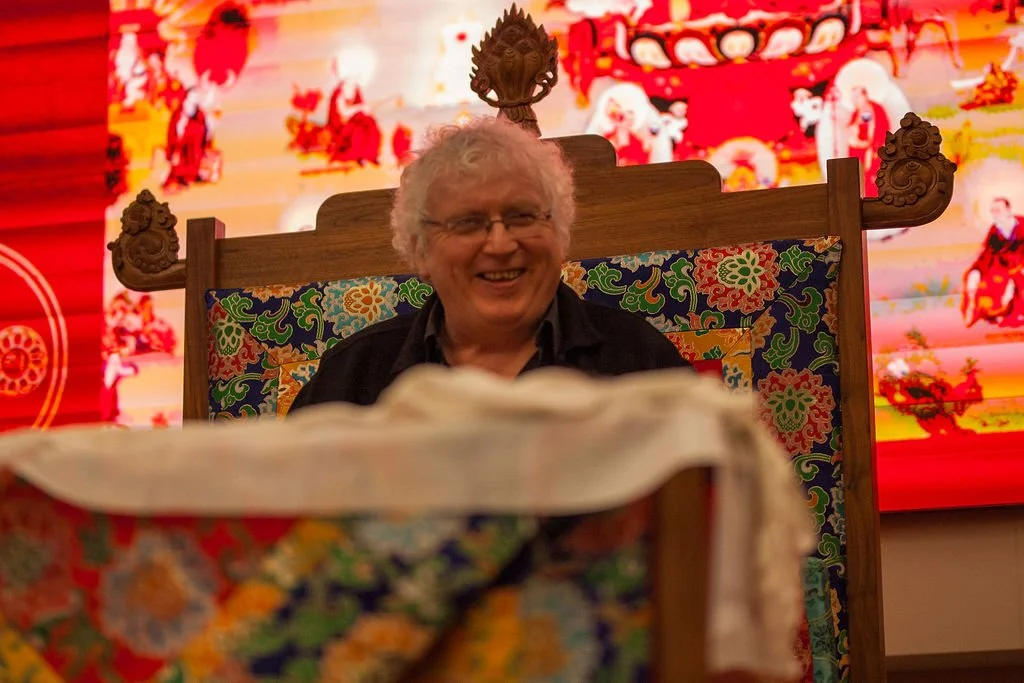
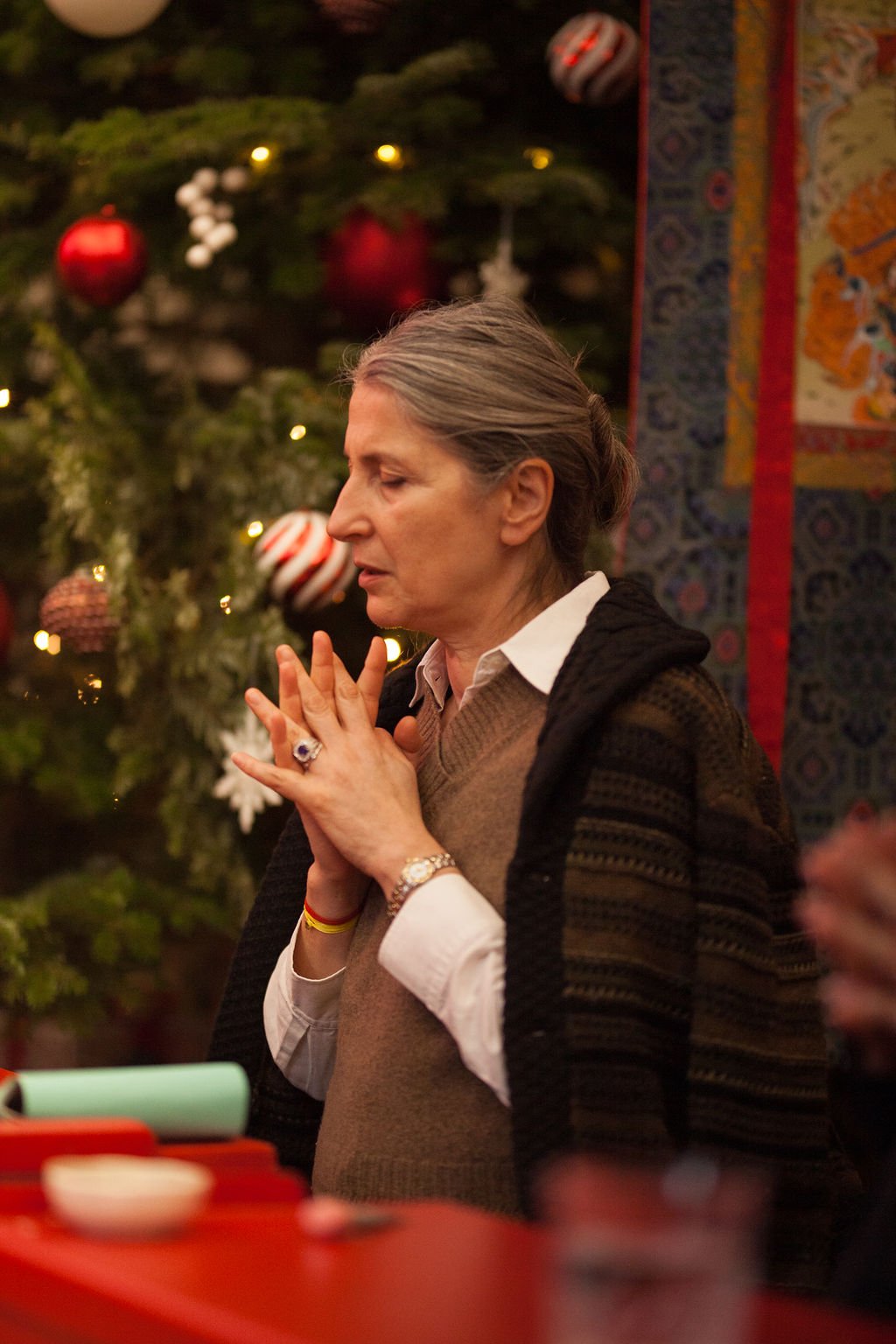
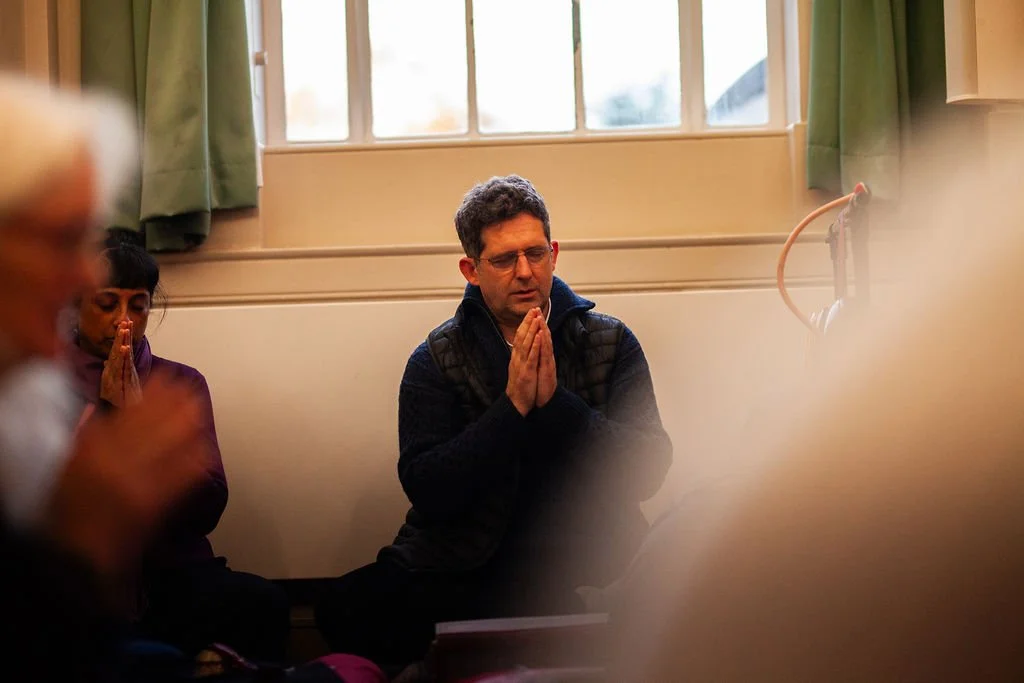
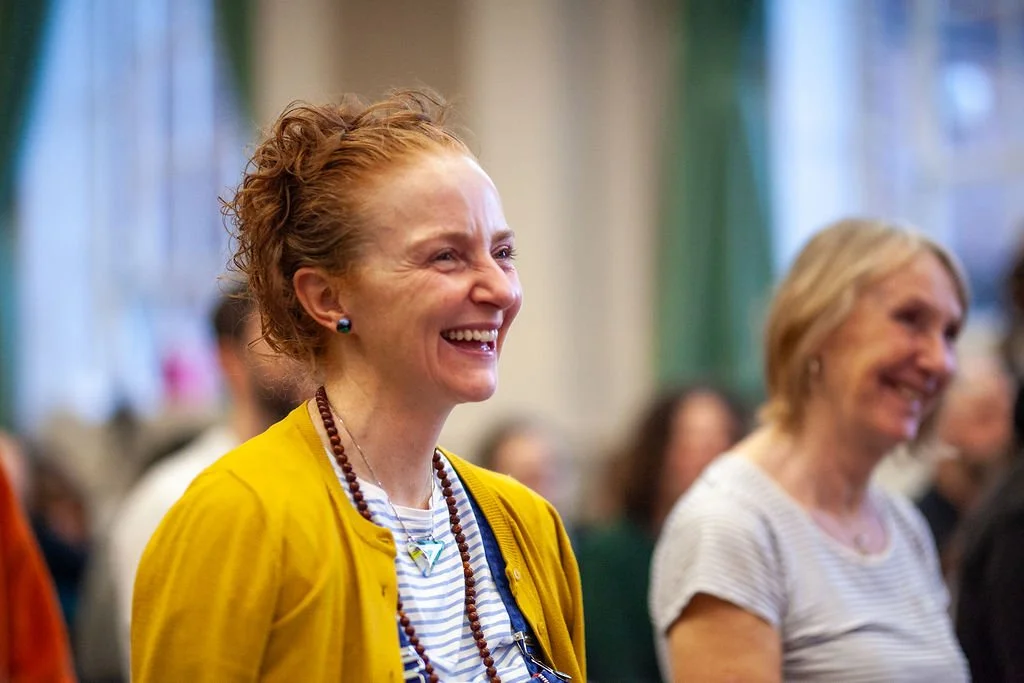
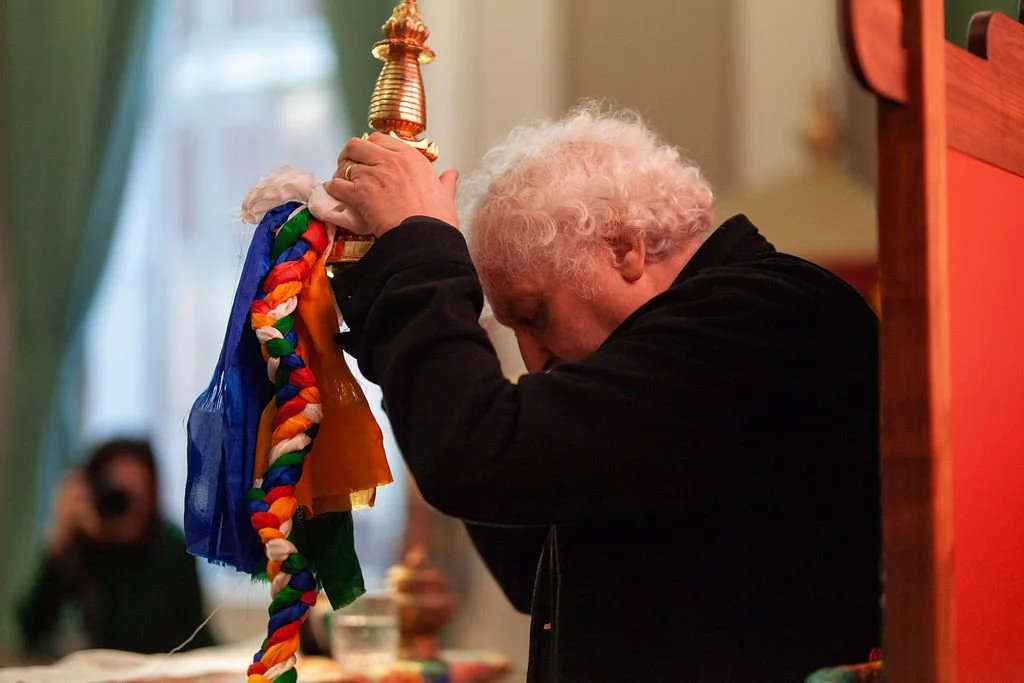
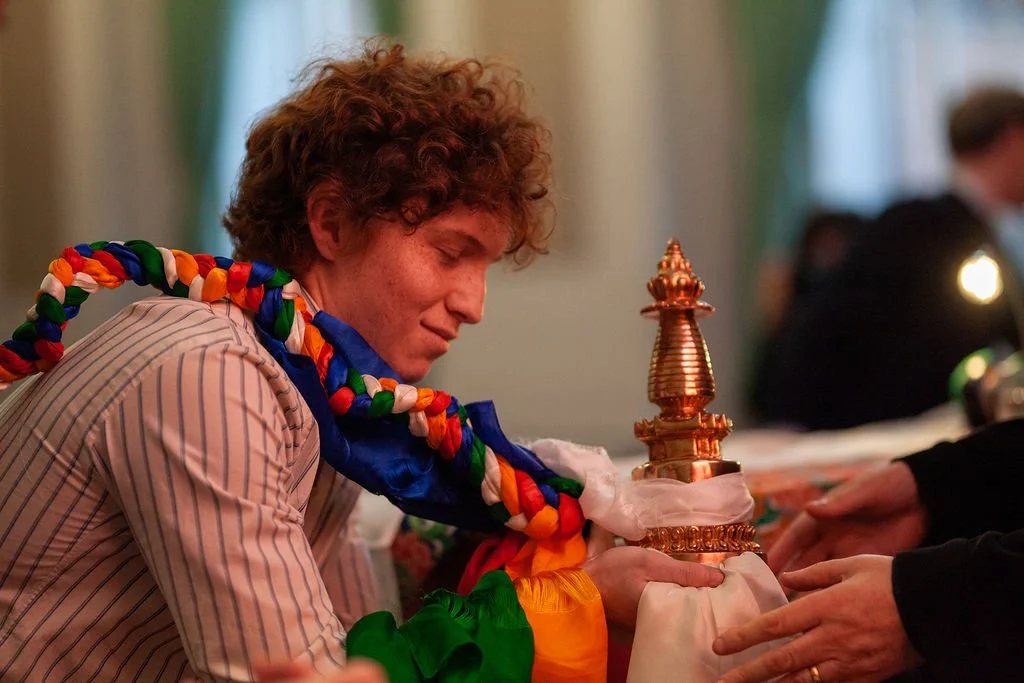
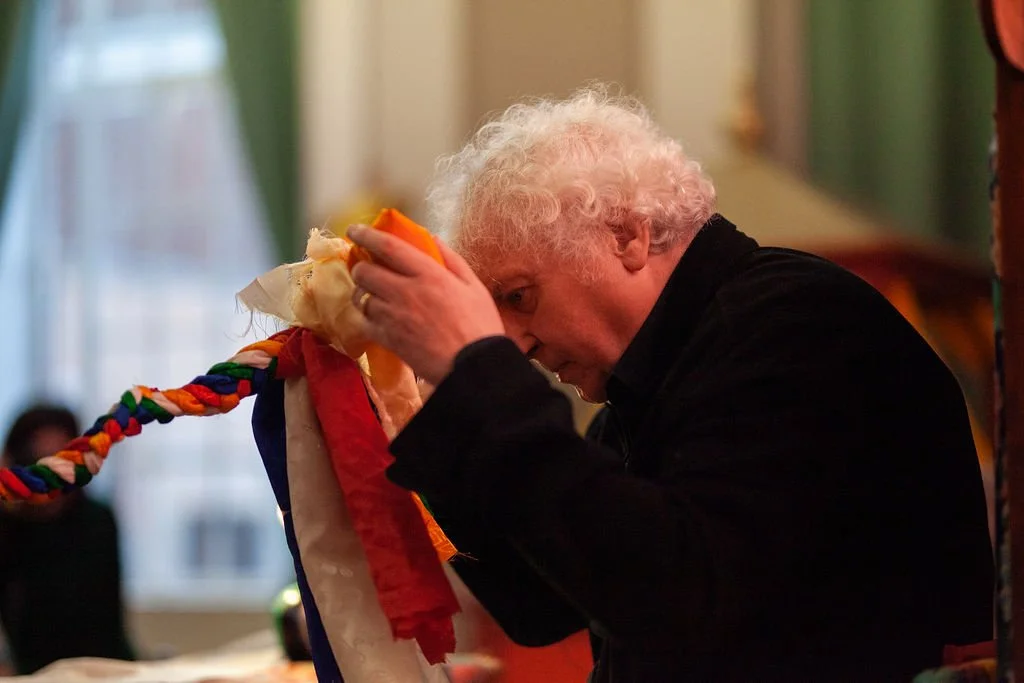
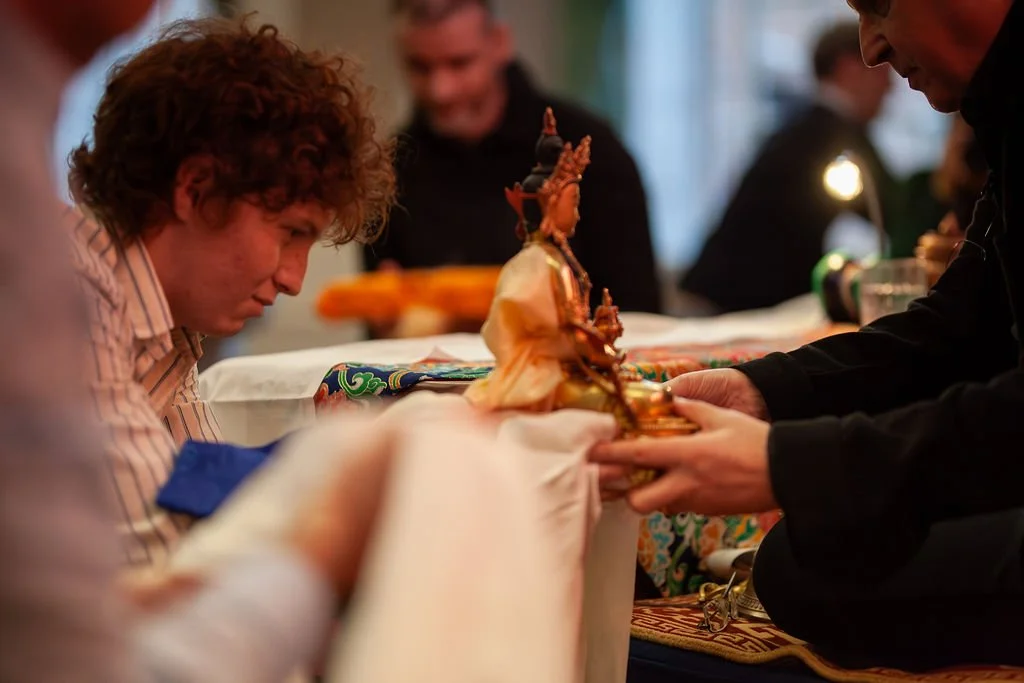
In the afternoon, Lama Jampa bestowed the empowerment of Sangye Menla (Medicine Buddha), continuing the theme of compassion for all beings. He gave clear advice on how the Medicine Buddha mantra can be used not only for our own benefit, but also to help bring about a good rebirth for others. Lama Jampa concluded by stressing the importance of not being swept along by current political trends such as the movement toward “assisted dying,” encouraging attendees to reflect deeply on Buddhist ethical principles. A full transcript of his remarks follows this article.
In a happy conclusion to the day, nine people took refuge, formally entering the Buddhist path.
The next teaching in this new cycle will take place on 21 March 2026.
We look forward to welcoming everyone again for another inspiring day of Dharma.
Lama Jampa’s talk following Medicine Buddha initiation (lightly edited transcript)
London November 29th, 2025
There are so many benefits from this practice and of course one thinks of it in terms of medical things. After all he’s called Medicine Buddha, Sangye Menla in Tibetan, Medicine Guru literally. One thinks in terms of medical healing and also one can think in terms of spiritual healing of the three poisons.
That is why it is particularly said that Sangye Menla practice is like a purification, for the living, for those who are dying and even for those who have recently died. There are many rituals that can be used to apply Sangye Menla in these ways.
So for instance, even if you break your moral discipline, one way to purify that is to rely on Sangye Menla practice and that is in accord with his vows.
And then, for the time of death it is so important. For instance, it is said whether it is for a human or an animal, if somebody is passing away, at that time if you can recite the Sangye Menla mantra or his name into their ear, this will be extremely beneficial in preventing them from having a bad rebirth, from being reborn in the lower realms. So this is Buddhist assisted dying.
Of course in regard to the process of dying, Lord Buddha said in the Vinaya that suicide is a non-virtuous action because suicide is always done with a mind of aggression towards the experiences of this life. He also said that if any monk or nun praises suicide to somebody or says to somebody, “Oh you’re sick you’re suffering you should end your life,” then that person is guilty of terrible non virtuous action. Also, if they supply the weapon, or the means of bringing about that suicide then they are also guilty of that killing.
So from our point of view, as dharma people, this is the way we help those who are passing away, by relying upon Sangye Menla. There are other rituals and practices of course but this is a very helpful way because it can even be used for those who cannot use human language like animals.
Now sometimes people say, “But we are Mahayanists therefore we do not have to follow the Hinayana vows and rulings on such things as taking life.” Therefore for instance, they cite the story of the Buddha when he took the life of the thief who was going to take the lives of five hundred merchants. Yes, it’s true that Lord Buddha did that when he took rebirth as Captain Good Heart, the ship’s captain, but he did that because he wanted to protect not just the four hundred and ninety nine innocent merchants on that ship, but the five hundredth one, the would be killer. He wanted to protect him and there was no other way of preventing him from doing this evil act which would have lead to his rebirth in hell. So in that circumstance, that became the bodhisattva action. But in regard to somebody’s temporary suffering, with the life-ending karma at the end of their life, we cannot do anything apart from just giving medicine and practicing the dharma and helping them with the dharma. These are the only bodhisattva activities that we can do. Otherwise we would be saying that whenever we see suffering, our response should be to kill the beings who are having it. But what would we do now? Should we go throughout the whole world? We all suffer, everybody suffers, right now there are millions of animals and humans that are suffering. Is it a bodhisattva activity to go and kill them all so that they do not have any further suffering? No of course not. It is obvious.
So please rely on Sangye Menla. If you have responsibility for humans or animals please rely only on Sangye Menla or other Buddhas at that time if you want to help them. There is no other way. So no matter what the economics are, no matter how convenient it may be for you, you cannot do that. You must practice only with the dharma, and with Sangye Menla we have a wonderful means.
I only mention this because it is a very important issue, because there are many forces in our society and our world that are pushing some very non-virtuous things. That is their job, that is their business. We are not politicians, but from a dharma point of view we must preserve the true medicine that is the dharma and act in accord with it. So please remember this. I am speaking very frankly and straight to you in accord with the Buddha’s teaching.
So I am really happy to have said this. Because I want the best for everybody. I want the dharma to continue and not to be perverted to be fitted in with our own personal convenience or the convenience of the people who seem to rule society. We want the dharma to continue for the true benefit of sentient beings.